As electricity costs continue to influence household and business budgets, more people are looking for reliable ways to manage their energy expenses. Solar energy has emerged as one of the most practical options for generating clean electricity while reducing dependence on conventional power sources.
In 2026, switching to solar energy is no longer just about environmental responsibility. For homeowners, businesses, industries, and institutions, a well-designed solar power system can offer long-term savings, greater energy independence, and access to modern renewable energy solutions.
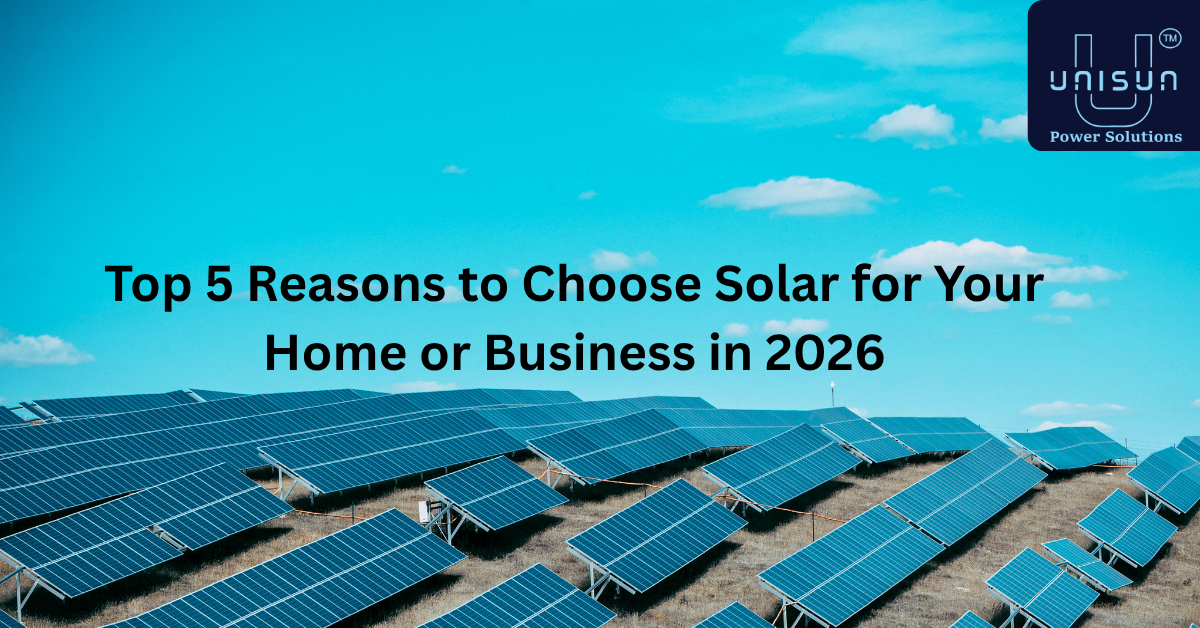
From rooftop solar systems to large commercial installations, solar power is becoming an increasingly important part of India’s energy landscape. Here are the top five reasons to consider switching to solar energy in 2026.
1. Reduce Your Electricity Bills
One of the biggest reasons to switch to solar energy is the potential to reduce electricity expenses.
A solar power system converts sunlight into electricity that can be used to power appliances, equipment, lighting, and other electrical loads. Depending on the system size, electricity consumption, available sunlight, and system design, solar can significantly reduce the amount of electricity purchased from the grid.
For homeowners, installing rooftop solar panels can help offset regular household electricity consumption. Businesses and commercial establishments can also benefit by generating part of their electricity on-site instead of relying entirely on grid power.
The long-term savings can make solar panel installation an attractive investment, particularly for consumers with consistently high electricity usage.
2. Make the Most of India’s Solar Potential
India receives abundant sunlight across many regions, making solar energy a suitable renewable energy option for homes and businesses.
Solar panels generate electricity during daylight hours. Modern solar systems can be designed according to a property’s available rooftop area, electricity consumption, and energy requirements. This allows users to make better use of otherwise unused rooftop spaces.
A rooftop solar system can be particularly useful for residential buildings, offices, shops, schools, factories, warehouses, and other properties with suitable roof areas.
Solar energy in India is also expanding beyond individual homes. Commercial and industrial users are increasingly exploring solar power solutions to manage energy costs and support their sustainability goals.
3. Support a Cleaner and More Sustainable Future
Solar energy is a renewable source of electricity that uses sunlight rather than conventional fossil fuels to generate power.
Switching to solar can help reduce dependence on traditional energy sources and contribute to lower carbon emissions associated with electricity generation. This makes solar power an important part of the transition toward cleaner energy.
For businesses, adopting renewable energy can also support broader environmental and sustainability initiatives. Companies looking to reduce their environmental impact can consider solar as part of their long-term energy strategy.
For homeowners, choosing solar panels is a simple way to participate in the growing shift toward renewable energy while generating electricity for everyday use.
The combination of financial savings and environmental benefits makes solar energy a practical choice for consumers who want to make a long-term change in how they use electricity.
4. Increase Energy Independence
Traditional electricity systems depend heavily on the power grid. When you generate electricity through your own solar power system, you gain greater control over a portion of your energy requirements.
This can be especially valuable for businesses and properties with significant daytime electricity consumption. A properly sized solar system can generate electricity close to where it is being consumed, reducing dependence on grid-supplied power.
Different types of solar systems can meet different energy needs. An on-grid solar system is connected to the electricity grid and is commonly used where grid connectivity is available. Off-grid systems can be designed for locations that require independent power generation, while hybrid solar systems can combine solar generation with battery storage for additional backup capabilities.
Choosing the right system depends on factors such as electricity consumption, location, roof area, budget, and backup requirements.
5. Long-Term Value and Growing Solar Opportunities
Solar panels are designed to generate electricity for many years, making solar a long-term energy investment rather than a short-term solution.
With proper installation, maintenance, and periodic system checks, a solar power system can continue producing electricity over an extended period. This can help users manage their electricity expenses over the long run.
The growth of solar energy is also creating opportunities beyond simply installing panels at home. India’s expanding renewable energy sector is creating demand for solar EPC services, installation professionals, distributors, entrepreneurs, and solar business partners.
For individuals interested in entering the renewable energy industry, working with an experienced solar company in India can provide opportunities to participate in this growing market.
Choosing the Right Solar Solution
Before installing solar panels, it is important to understand your property’s electricity requirements and available space.
A professional solar installation generally starts with a site assessment
Based on this assessment, a suitable solar power system can be designed for the property.
Choosing an experienced solar company can also make the process easier, from system design and equipment procurement to installation, testing, commissioning, and after-sales support.
Why 2026 Is a Good Time to Consider Solar
The solar industry continues to evolve, with increasing awareness of renewable energy, improvements in solar technology, and growing interest in rooftop solar solutions.
For consumers, the decision to switch to solar should not be based only on short-term savings. It should be viewed as a long-term energy decision.
Whether you are a homeowner looking to reduce electricity bills, a business seeking better control over energy costs, or an organization working toward sustainability goals, solar energy can provide a practical pathway toward cleaner and more independent power generation.
Switch to Solar Energy With Unisun Power Solutions
Choosing the right solar partner is an important part of a successful solar installation. Unisun Power Solutions provides solar EPC solutions for residential, commercial, and industrial requirements across India.
From site survey and system design to procurement, installation, testing, commissioning, and project support, the company provides end-to-end solar solutions based on individual energy requirements.
Whether you are considering a rooftop solar system for your home or a larger solar power system for your business, professional guidance can help you select a solution that fits your requirements.
Conclusion
Switching to solar energy in 2026 can offer several long-term advantages. It can help reduce electricity expenses, make better use of India’s solar potential, support cleaner energy generation, improve energy independence, and provide long-term value.
As solar adoption continues to grow across India, choosing the right system and working with an experienced solar company can help you make a more informed investment.
If you are planning to install solar panels for your home, business, or industrial property, now is a good time to explore your options and understand how solar energy can work for your specific energy needs.
Ready to Switch to Solar?
Contact Unisun Power Solutions today for reliable solar solutions for your home or business. Call us to get started.