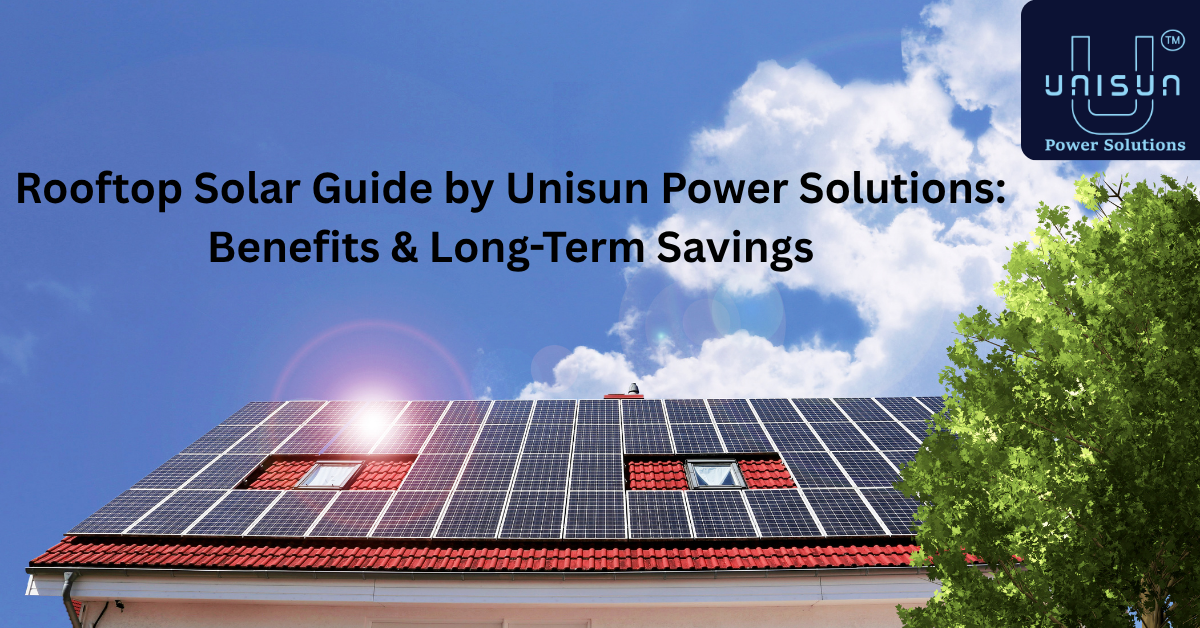
As electricity costs continue to be an important concern for homeowners and businesses, rooftop solar has become a practical way to generate clean electricity and manage long-term energy expenses. A rooftop solar system allows you to use the available roof space to generate power from sunlight while reducing your dependence on conventional grid electricity.
Unisun Power Solutions helps customers explore suitable solar solutions based on their electricity consumption, available rooftop space, system requirements, and long-term energy goals. This guide explains the major benefits of rooftop solar and how a properly planned solar system can provide long-term value.
What Is Rooftop Solar?
Rooftop solar is a solar power system installed on the roof of a home, office, commercial building, or other suitable property. Solar panels capture sunlight and convert it into electricity.
A typical rooftop solar system may include:
- Solar panels
- Solar inverter
- Mounting structure
- DC and AC cables
- Protection and safety equipment
- Metering and grid connection components, where applicable
The electricity generated can be used to meet the property’s power requirements. Depending on the system configuration and applicable regulations, surplus electricity may also be exported to the electricity grid.
Why Choose Rooftop Solar?
One of the biggest advantages of rooftop solar is that it allows property owners to generate electricity at their own premises. Instead of relying entirely on electricity supplied through the grid, solar helps create an additional source of power.
For homeowners and businesses with suitable rooftops, solar can provide benefits such as reduced electricity expenses, better energy planning, and the use of renewable energy.
However, the actual savings depend on several factors, including electricity consumption, electricity tariff, system size, sunlight availability, rooftop conditions, equipment quality, and applicable policies.
1. Reduce Your Electricity Expenses
A properly designed rooftop solar system can generate a significant portion of the electricity required by a property.
When solar electricity is used directly on-site, the amount of electricity that needs to be purchased from the grid can decrease. This can help reduce monthly electricity expenses over time.
The potential savings vary from property to property. Before installation, it is important to assess previous electricity bills and understand the property’s consumption pattern.
At Unisun Power Solutions, the focus is on selecting a solar solution according to actual energy requirements rather than simply recommending the same system size for every customer.
2. Make Better Use of Your Rooftop
For many properties, the rooftop is an underused space. Installing solar panels can turn this available area into a power-generating asset.
The amount of rooftop space required depends on factors such as the system capacity, panel specifications, layout, shading, and installation requirements.
A professional site assessment can help determine whether the roof is suitable for solar installation and how the panels can be positioned for effective generation.
3. Long-Term Solar Benefits
Solar panels are designed to operate for many years when properly installed and maintained. This makes rooftop solar a long-term energy investment rather than a short-term purchase.
The long-term value of a solar system can come from years of electricity generation and reduced dependence on grid power.
When evaluating a solar installation, customers should consider more than the initial purchase price. Panel quality, inverter performance, installation standards, warranty coverage, maintenance requirements, and after-sales support can all influence the overall value of the system.
4. Use Clean and Renewable Energy
Solar energy comes from sunlight, making it a renewable source of electricity.
By generating electricity from solar power, homes and businesses can increase their use of renewable energy and reduce their dependence on conventional electricity sources.
For property owners interested in making their energy consumption more sustainable, rooftop solar provides a practical way to incorporate clean energy into everyday electricity use.
5. Improve Energy Planning
Electricity requirements can change over time. A family may add new appliances, a business may expand its operations, or a property may experience changes in daily electricity consumption.
Therefore, choosing a solar system should involve both current and future energy requirements.
Unisun Power Solutions can help customers evaluate factors such as:
- Monthly electricity consumption
- Electricity bill patterns
- Available rooftop area
- Current and future power requirements
- Solar system capacity
- Installation requirements
- Available solar incentives or applicable schemes
This approach can help customers make a more informed solar investment.
Understanding Rooftop Solar Savings
Solar savings should not be viewed as one fixed amount for every customer.
For example, two homes with the same rooftop size may have different electricity consumption patterns and therefore different potential savings.
The key factors affecting rooftop solar savings include:
Electricity Consumption: Higher electricity consumption may provide greater opportunity to use solar-generated electricity.
System Capacity: The size of the solar system affects how much electricity it can potentially generate.
Location: Solar generation varies depending on geographical location, sunlight conditions, and weather.
Rooftop Conditions: Shading, orientation, available space, and roof structure can affect system performance.
Electricity Tariff: The price paid for grid electricity influences the financial value of solar generation.
Policy and Metering Rules: Applicable state and local regulations can affect how excess electricity is handled and how benefits are calculated.
Because of these factors, a proper assessment is important before deciding on a system size.
Rooftop Solar and Long-Term ROI
Return on investment, commonly referred to as ROI, is another important consideration when evaluating rooftop solar.
The overall financial outcome depends on the system’s installation cost, electricity generation, electricity tariff, applicable incentives, operating costs, and system lifespan.
Instead of focusing only on the initial installation price, customers should consider the expected long-term value of the system.
A reliable solar installation with quality components and professional installation can support consistent performance over its operating life.
Why Choose Unisun Power Solutions?
Choosing the right solar partner is an important part of your solar journey. Unisun Power Solutions focuses on helping customers identify solar solutions that match their specific requirements.
From understanding electricity consumption to planning the appropriate system, installation, and ongoing support, the objective is to make the transition to solar simpler and more structured.
A solar system should be selected based on your property’s actual requirements—not simply based on the lowest upfront price.
Conclusion
Rooftop solar can be a practical solution for homeowners and businesses looking to generate renewable electricity, reduce dependence on grid power, and achieve long-term energy benefits.
From lowering electricity expenses to making better use of rooftop space and supporting clean energy adoption, the benefits of solar can extend well beyond the initial installation.
The right system depends on your electricity consumption, rooftop conditions, location, budget, and future energy requirements.
Unisun Power Solutions can help you understand your rooftop solar options and choose a solution designed around your energy needs.
If you are planning to install rooftop solar, start by evaluating your electricity consumption and rooftop suitability. With the right planning, quality equipment, and professional installation, your rooftop can become a valuable source of clean energy for years to come.
Explore Solar Services with Unisun Power Solutions and take the next step toward smarter, cleaner energy.